History doesn’t repeat itself, but it rhymes. In the early 1980s, two subcontractors sat in a meeting listening to prime contractors stumble through a 2.5-hour explanation of a broken system. They looked at each other, walked out, and decided they could just build it better themselves.

Those two men were Doug Dearie and Carl Muller. That moment didn’t just launch a company called Highland Technologies. It launched a four-decade obsession with a single, difficult problem: How do you extract truth from chaos?
Today that mission has a new home. Carl Muller is now Bart & Associates’ Chief Artificial Intelligence Officer, leading the charge to bring pragmatic, mission-focused AI to the federal government. But to understand where we are going, you have to understand where the map was drawn.
Who is Carl Muller?
Carl brings over 30 years of experience building and operating mission-critical technology systems. Long before “AI” was a headline, he was designing enterprise platforms for content, records, and knowledge management for federal law enforcement and intelligence agencies. His leadership style rejects hype in favor of durability. He focuses on systems that work when the stakes are highest.
To capture the full perspective of this journey, we sat down with Doug Dearie, Carl’s longtime business partner and co-founder of Highland Technologies. In a candid phone interview, Doug connected the dots between the “cowboy coding” days of the 80s and the agentic AI workflows we are deploying today.
The Pixel, The Character, The Meaning
In the days of mainframes, data was structured. It lived in rows and columns. But Doug and Carl realized the world didn’t work like that. The world worked in paper, in images, and in messiness.
“We realized the CRT was now addressable at the pixel level, not just the character level.”
This realization led to the development of HighView, a system designed to tackle the “dark data” that traditional databases couldn’t touch. But storing an image wasn’t enough. You had to read it.
In the 80s, they integrated early Optical Character Recognition (OCR), taking prototypes from visionaries like Ray Kurzweil to turn scanned images into text. By the 90s, text wasn’t enough. They needed intent. They integrated WordNet, a massive lexical database of English, to create early vector-based search. They weren’t just looking for keywords. They were looking for relationships between concepts.
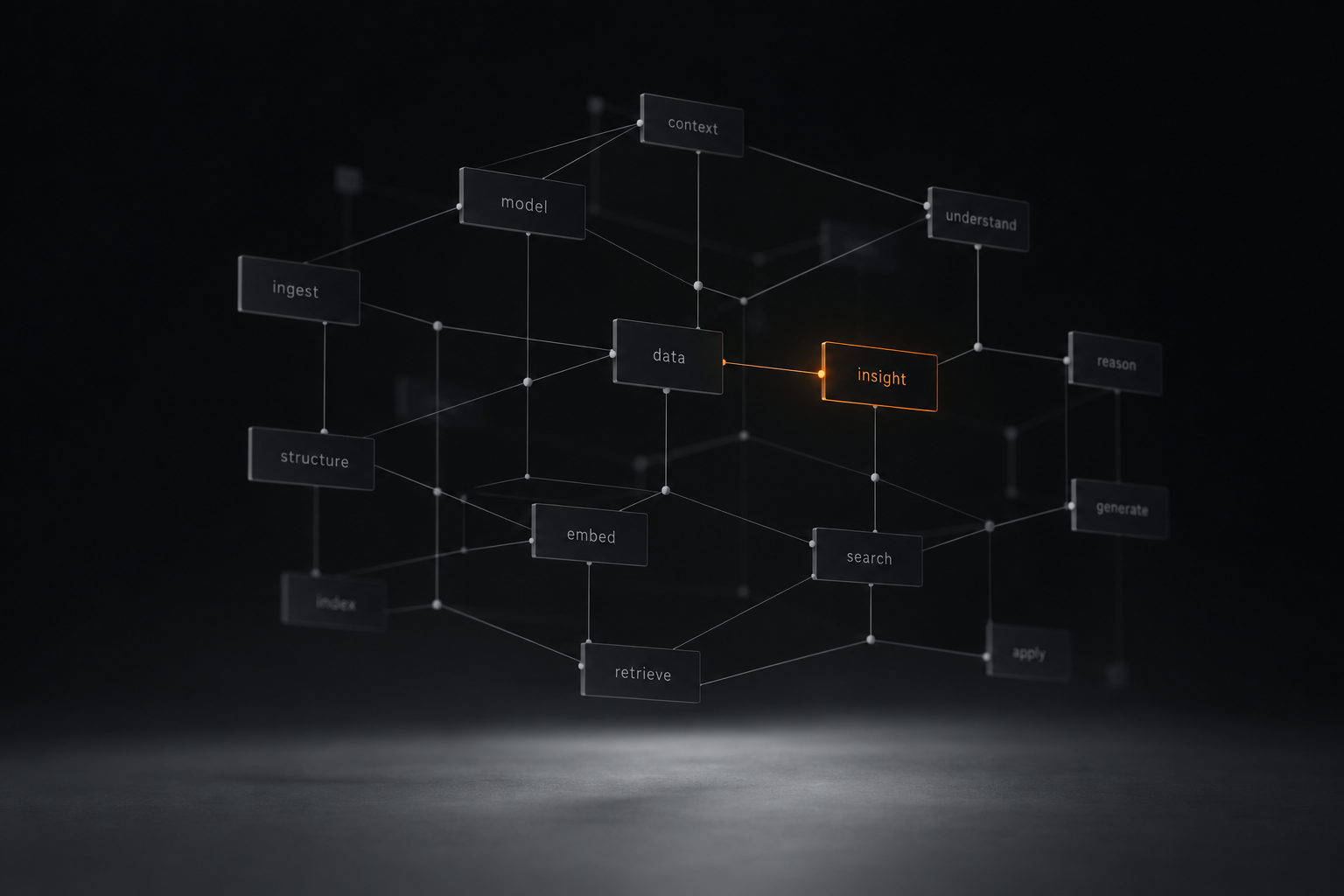
They were building the grandfather of the Large Language Model years before the compute power existed to fully realize it.
The Crucible: DOMEX in the Desert

The theory of unstructured data collided with the reality of war in 2003. As the invasion of Iraq began, the US military faced a massive intelligence bottleneck known as DOMEX, or Document and Media Exploitation.
Terabytes of captured documents, hard drives, and laptops were coming in from the field, and almost none of it was in English. The sheer volume threatened to bury critical intelligence under a mountain of Arabic and Pashto script.
The initial workflow was linear and flawed:
- Ingest the document
- Send it to a linguist for translation
- Send the translation to an intelligence analyst
It was too slow. Doug recognized the failure and deployed downrange, literally following the Marines into Iraq, to fix the system in the field north of Baghdad.
“We realized what we needed to do is have the linguist and the intel analysts sitting next to each other, looking at the document together. The linguist could translate, but the intel analyst could determine why it mattered.”
They rewrote the workflow in the dirt. They integrated machine translation to triage documents and paired humans side-by-side to extract meaning. Speed increased. Context improved. The mission succeeded.
The Godfathers of AI
In a very real sense, Doug and Carl were the godfathers of applied AI. They were building the logic of artificial intelligence—semantic networks, vector search, automated translation, and “human-in-the-loop” reinforcement—long before the hardware existed to support the marketing buzzwords.
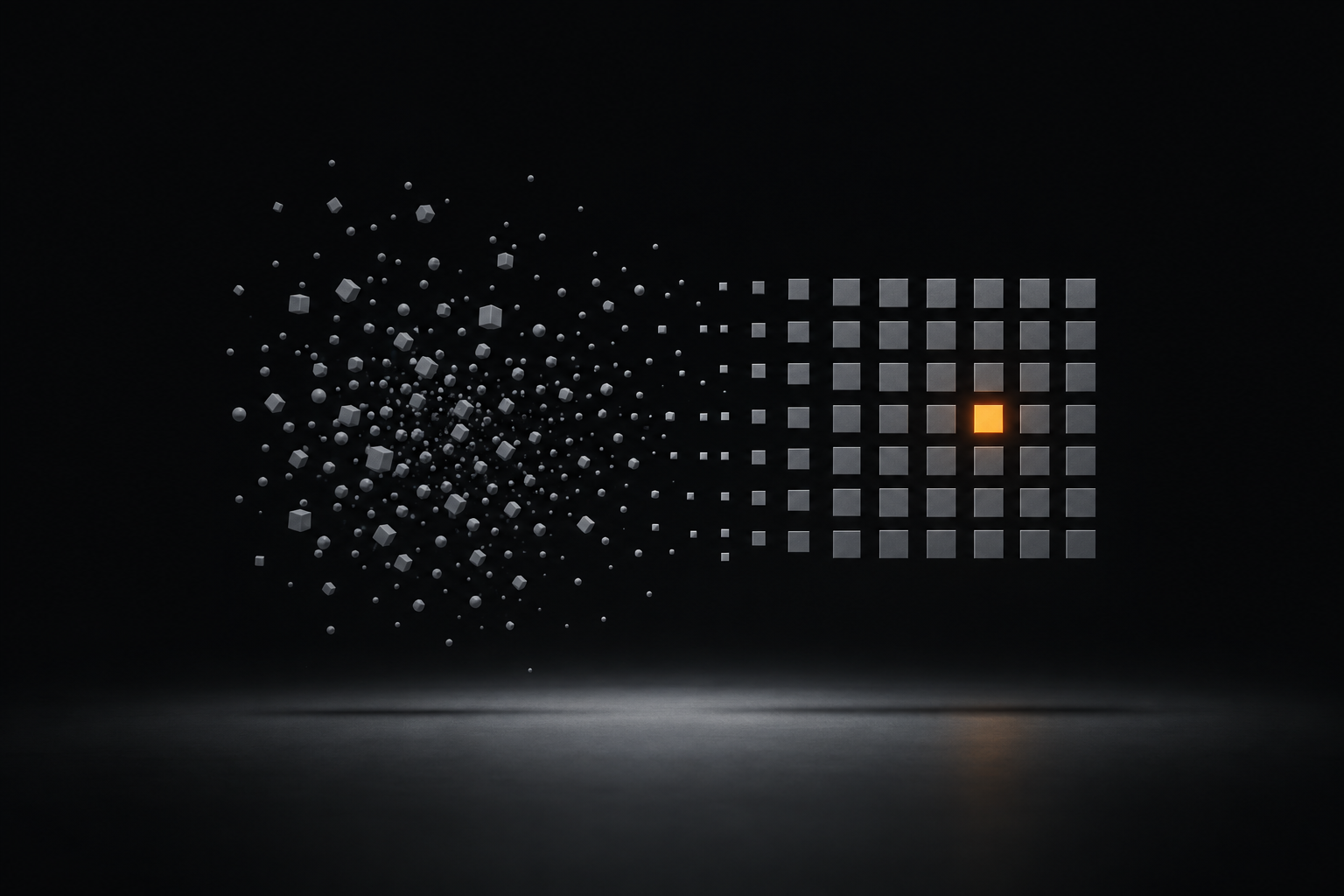
Today the technology has finally caught up to their vision.
The “Linguist” from 2003 is no longer just a human translator. It is an AI Agent. The “Analyst” is no longer just an intel officer. It is the modern decision-maker.
Back then a human linguist translated a document so an analyst could understand it. Now an AI agent digests a massive corpus of data, interprets the intent, and serves the answer to a human decision-maker instantly.
The View from the Bridge
For Carl Muller, who has navigated every major technology shift since the mainframe, the current moment feels distinct.
“In the past, no matter how much hype there was about a new technology, the development felt incremental if you were close to it.”
But this time, the shift isn’t incremental. It is structural. According to Carl, the defining characteristic of this era is the ability to use an LLM to gain insight into large document collections and use that data to generate new data.
“These are tools with no modern parallel. That ability alone will collapse the software lifecycle and change the way software is developed and deployed.”
When asked what separates durable progress from the noise of the market, Carl’s answer is characteristically blunt:
“Results in the form of delivered capability.”
The durable process is no longer about just storing data. It is about the arrangement of connections within collections that were previously impossible to manage.
Riding the Wave
The torch has been passed. Just as Doug and Carl disrupted the status quo in the 80s, the engine room has been rebuilt for a new era.
A small and capable team at B&A is absorbing four decades of hard-won experience. We are not just writing code. We are learning the architecture of “truth” from the men who wrote the first draft.
For Carl, this is personal:
“When I saw what AI is going to do to our profession, I knew the best thing I could do was sound the alarm about complacency and work with the people who get it to get in front of this wave.”
Complacency is the real risk. The landscape is shifting faster than most organizations can adapt, and that is exactly where opportunity lives. We aren’t waiting for the industry to catch up. We are positioning ourselves now, building the capabilities and partnerships that will define what is possible when the wave truly crests.
The ride has already started. We intend to be ready.